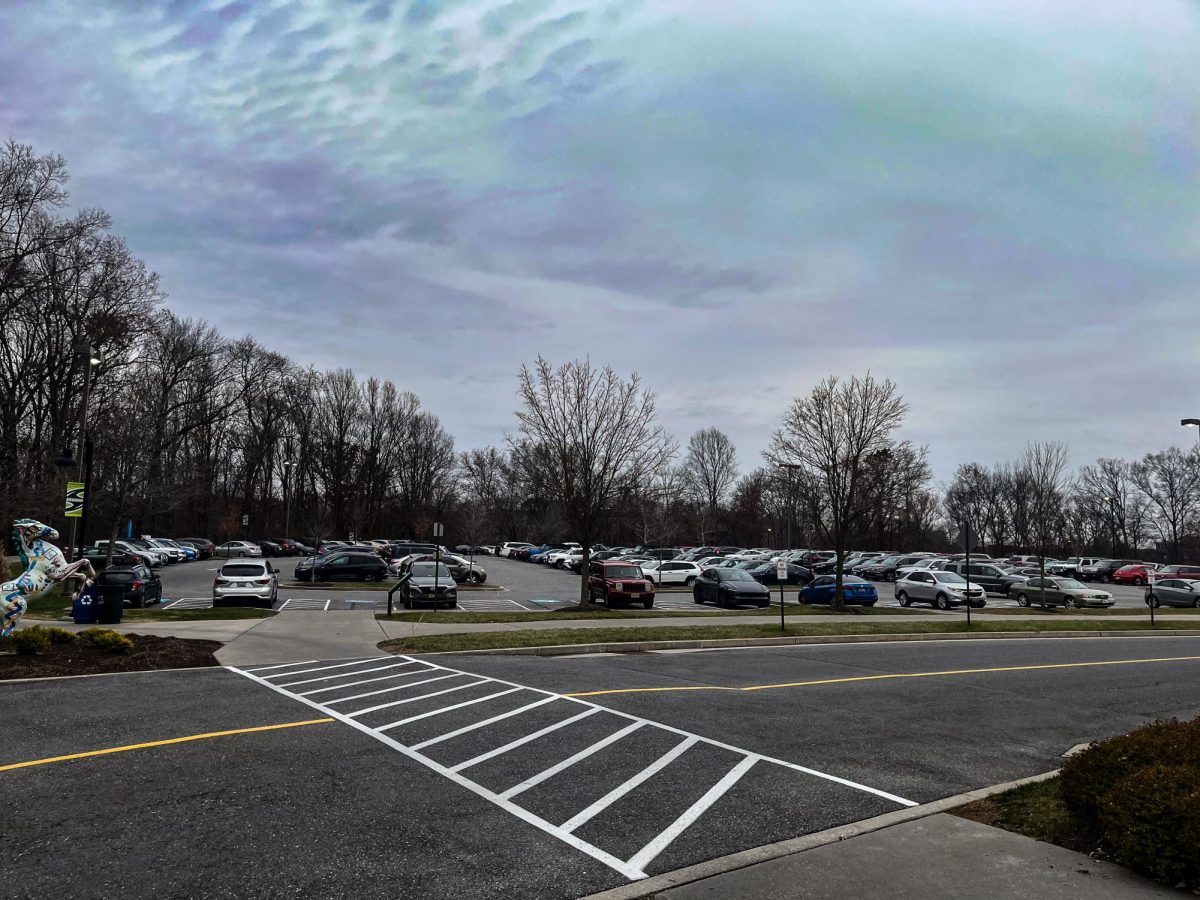

































On the last day of March, Stevenson faculty, staff and students drove onto campus and, if they didn’t read their email, were surprised to find that several parking areas on the Owings Mills North Campus had been closed.
The reason?
It was the grand opening of the Berman Family Performing Arts Center, and the donors who footed the bill for the building needed places to park for the gala event, which featured musical performances and a lavish buffet. A frustrating situation for regular commuters, to be sure, but not an uncommon occurrence.
Stevenson University’s parking debate is one nearly every student encounters: finding a spot close enough, early enough and without risking a ticket. With 3,226 active permit holders and more than 1,000 academic parking spaces across Greenspring South and Owings Mills North, the conversation around parking isn’t just about cars. It’s about daily routines, accessibility and campus culture.
According to Jim Mustard, vice president for facilities and administration, Stevenson’s parking system stands apart from other universities.
“Parking at Stevenson is unlike many of our peer institutions in higher education. At Stevenson, students and employees park for free, whereas many institutions charge for parking and many do not allow freshmen to have vehicles on campus,” Mustard said.
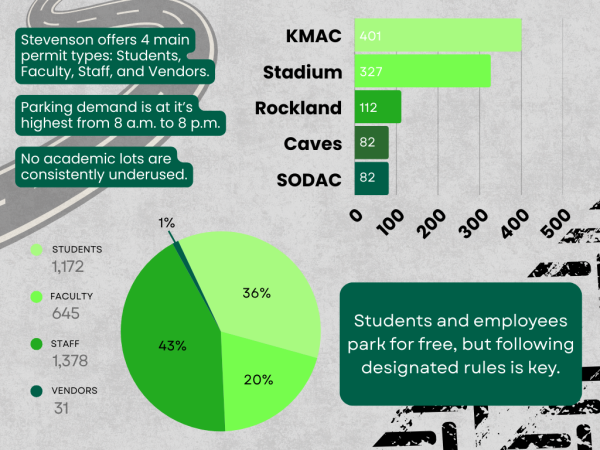
Stevenson offers four main permit types:
- Student permits: 1,172
- Faculty permits: 645
- Staff permits: 1,378
- Vendor permits: 31
Across the major academic lots — Rockland, Stadium, Caves, the School of Design (SODAC) and KMAC — the university provides the following number of spaces:
- Rockland: 112
- Stadium: 327
- Caves: 82
- SODAC: 82
- KMAC: 401
Mustard said the university has enough spaces, but the biggest issues come from avoidable habits and rule-breaking.
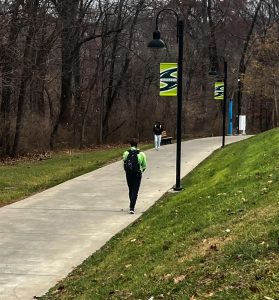
“The challenges that arise are most often due to individuals not following campus parking regulations by parking in lots and spaces that are not designated for them, or choosing to drive their cars from South to North campus instead of using the free campus shuttles or our Dell walking path,” he said.
While parking is free, Mustard emphasized that responsibility matters.
“Being considerate and respectful of each other goes a long way in keeping our campus accessible and safe for everyone,” he said.
Even with enough spaces on paper, commuter students often say the real issue is convenience rather than capacity.
Sofia Asman, a fourth-year commuter, usually parks in the KMAC lot or Rockland lot so she can get to class easily. She described one day when forgetting her SD card for photography class caused her to lose her space.
“I drove 15 minutes back to the house to get it and had to give up my spot. I was so mad. I got back and of course it was taken, so I had to park somewhere else far away,” she said.
Asman said the change she believes would make the biggest difference for commuters is simple: “They should make more parking spots just for commuters.”
Olivia Jung, a third-year commuter student, said her parking experience varies depending on which campus she is on.
“On the Owings Mills Campus I usually park in the Stadium lot or Caves because commuters can’t park in the D lot and can’t park in the C lot until after 5 p.m. On Owings Mills North I park in the North parking lot,” she said.
Finding parking on North Campus, however, can be more difficult.
“I do struggle to find a space at North on most days and end up having to park further back and walk a longer distance,” she said. Still, Jung has not been late to class because she plans ahead and said, “I try to arrive on campus at least 35 minutes before my class is set to start.”
She believes improvements should focus on enforcement and accessibility for commuters.

“Making sure that when it’s not the open hours, residents aren’t parking at North, and having some spaces or parking available at the top of the hill on the Greenspring Campus because the walk from Caves parking or Stadium parking is long and steep,” she said.
Mustard confirmed that KMAC and SODAC fill first, reflecting commuter frustrations about distance and accessibility.
He also noted that academic parking demand stays consistently high from 8 a.m. to 8 p.m, making both early classes and late-afternoon arrivals equally challenging.
And for those wondering whether any lot stays empty?
“No academic lots are underused,” Mustard stated plainly.
While the university maintains that spaces are sufficient, student experiences show that location and timing shape the daily parking reality. With strong opinions from both leadership and commuters, the conversation ultimately lands somewhere in the middle: parking works, but it doesn’t always work well for everyone.
And with no major changes planned, the focus for now is on communication, enforcement, and student habits—like using the shuttle or the Dell trail instead of making a short drive across campus.
Whether you’re a freshman commuter or a senior running late from lunch, the daily parking search remains a shared Stevenson experience. And as long as students keep circling—at 8 a.m., 2 p.m., or 4:15 p.m.—so will the conversation.